Ice Report
Split Rock Software LLCWeather
3.798.00 Reviews
- Version
- 2.7.1
- Installs
- 50.00K
- Age Rating
- Everyone
Screenshots
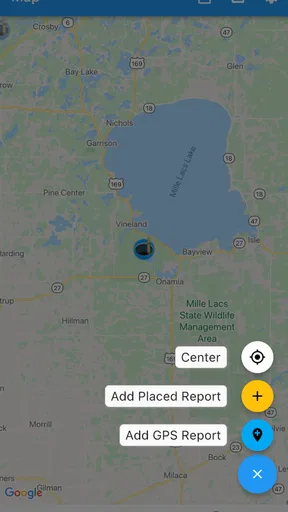
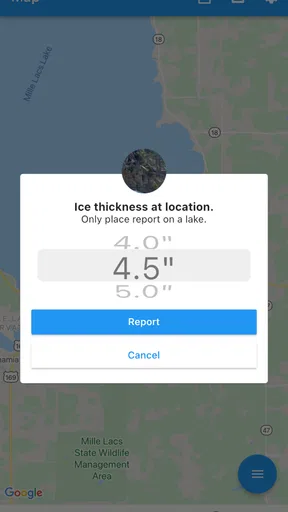
Our Review of Ice Report
 Analysis by Appyee
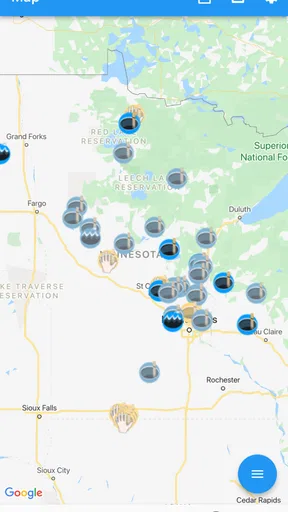
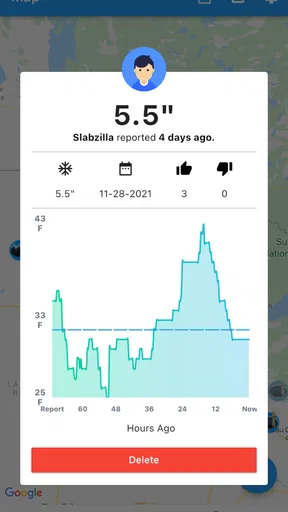
Ice Report is a focused weather app for one very specific question: what are the ice conditions like on a lake right now? After spending time with it, my view is that its value comes less from broad forecasting and more from turning local observations into information other ice anglers can use. If you fish on frozen lakes and want a simple way to check or share ice reports, this app has a clear purpose. If you are looking for radar maps, hourly forecasts, storm warnings, or a complete outdoor weather dashboard, it will feel too narrow.
That narrow focus is not a weakness by itself. In fact, it is what makes the app interesting. Instead of trying to replace a full weather service, Ice Report is built around community knowledge. The developer, Split Rock Software LLC, presents it as an easy way to share lake ice information, and that idea is more practical than it may sound. Ice conditions can change from one shoreline to another, and a general air-temperature forecast cannot tell me everything I need to know before walking onto a frozen lake.
What Ice Report is really useful for
The app belongs in the weather category, but I would think of it as a specialized field-reporting tool. Its job is to help people exchange timely information about frozen lakes, especially in the context of ice fishing. That gives it a different role from the usual weather apps installed on most phones.
A standard weather app may tell me the temperature, wind, precipitation, and forecast for a nearby town. Those details matter, but they are indirect clues. Ice Report is aimed at the more local question: has someone recently checked the ice at the lake I am considering? That distinction is the app’s strongest argument.
In everyday use, I can imagine opening it before leaving home on a winter morning, checking whether there is a recent report for a destination, and then deciding whether the trip is worth planning. I could also use it after visiting a lake to pass along what I observed. The useful habit is not simply checking the app once; it is treating it as part of a routine before every outing.
That routine should include common-sense safety checks. A report from another person is helpful context, not a guarantee that every part of a lake is safe. Ice thickness can vary around inlets, outlets, vegetation, moving water, pressure cracks, shorelines, and areas affected by changing weather. Ice Report can help me gather local clues, but it should never replace personal judgment, proper equipment, or checking conditions when I arrive.
A community tool rather than a conventional forecast
The biggest difference between this app and familiar alternatives is the source of its usefulness. A mainstream weather app depends mainly on forecast models and weather stations. Ice Report is more valuable when people contribute observations from the places they actually visit. That makes the information potentially more relevant to a specific lake, but also more dependent on participation.
This creates an important trade-off. A local report can be more meaningful than a regional temperature reading, yet it may not be available for every lake or may not be recent enough for a current decision. The app works best in areas where anglers regularly share information. In a quiet region with few contributors, the experience may be much thinner.
I also would not treat an old report as current simply because it appears in the app. A warm spell, rain, wind, or heavy traffic can change conditions quickly. The most responsible workflow is to look for the newest local information, compare it with recent weather, and then verify conditions yourself. That is a more careful process than opening a forecast and assuming one number answers everything.
Where it fits into a real fishing day
Consider a realistic Saturday scenario. I am planning to drive to a lake I have not visited recently. Before packing the auger, shelter, and tackle, I check Ice Report for a recent local update. If I find useful information, I can use it to decide whether that lake deserves the trip or whether I should choose another destination. If I visit the lake, I can later contribute my own observation so the next person has a better starting point.
The app is especially sensible for anglers who visit several lakes during a season. Rather than relying only on memory or scattered conversations, they have a dedicated place to look for ice-related information. That can make trip planning more deliberate. It may also reduce wasted drives when a destination has already been reported as questionable or unsuitable.
There is a less obvious benefit here: contributing a report can improve the quality of future decisions for the whole local group. The value is cumulative. One isolated report is limited, while a pattern of recent observations from familiar lakes becomes much more useful. I would approach Ice Report with that community mindset instead of expecting it to behave like a polished, always-complete commercial forecast.
The practical limits you should understand first
The main limitation is dependency on fresh, local participation. A community reporting app cannot create information where nobody submits it. That means the app may be excellent for one popular fishing area and far less useful for another. Before relying on it, I would check whether the lakes I care about actually have meaningful activity.
Another limitation is that shared conditions are snapshots. Even a well-intentioned report reflects a particular location and moment. It may not describe the opposite side of a large lake, a hidden channel, or a route that receives different pressure. This is not a flaw unique to Ice Report, but it matters more here because the app’s central purpose can tempt users to treat a report as a complete safety assessment.
I also see a difference between information for planning and information for navigation. Ice Report may help me choose where to investigate, but it is not the tool I would use for detailed route guidance, emergency planning, or a full weather briefing. I would still keep a conventional weather app available for wind changes, incoming precipitation, temperature swings, and broader forecasts.
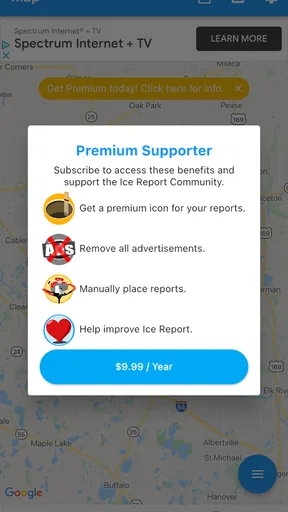
The app’s free entry point makes it easy to try, but optional in-app purchases range from $9.99 to $12.99 per item. I would consider those purchases carefully rather than assuming they are necessary for every user. A casual angler who only wants to browse occasional reports may have a different view of the value than someone who uses the service throughout an entire ice-fishing season.
What the app feels like as a long-term tool
Ice Report is most convincing when it becomes part of a repeatable process. I would use it before a trip, compare what I see with recent local weather, and then make a cautious decision after arriving. After fishing, I would record useful observations while they are still fresh. That workflow gives the app a purpose beyond passive browsing.
A good report should be treated as practical context rather than casual conversation. The more specific and timely the contribution, the more useful it is to another angler. Even without turning the process into paperwork, I would make a note of the lake, the area checked, when it was observed, and any changes that might affect interpretation. The app’s community value depends on users thinking this way.
One non-obvious trade-off is that convenience can encourage overconfidence. Because a report is easy to read on a phone, it may feel more authoritative than a brief conversation with someone who was physically there. I would use the app to ask better questions and plan more intelligently, not to outsource responsibility. That distinction is essential for any ice-related tool.
Another useful habit is checking the app at two separate points: once during planning and again before setting out. Conditions can change between those moments, and a second look may reveal a newer report or a different local picture. This simple two-check routine is more sensible than treating the first result as permanent.
Who should download it
I think Ice Report is a good match for active ice anglers, people who regularly visit frozen lakes, and local fishing communities that want a shared place for conditions. It is also worth considering if you often make decisions based on lake-specific information rather than a forecast for the nearest town.
The app may be particularly useful for someone who fishes unfamiliar waters. In that situation, local reports can provide a starting point before the first visit. They do not remove the need for caution, but they can help narrow down the options and encourage better preparation.
I would be more hesitant to recommend it to someone who rarely goes ice fishing, lives in an area with little community activity, or expects a complete weather service. For those users, a general weather app may offer more day-to-day value. Likewise, anyone wanting detailed maps, radar, long-range forecasting, or broad outdoor planning should look elsewhere or use Ice Report alongside another app.
The age rating is Everyone, which fits the basic nature of a weather and information tool. It is free to install, and it runs on Android devices starting with version 7.0. The current version is 2.7.1, so users with older supported phones may still be able to try it without needing a recent device. Those details make the app accessible, although the real question is still whether the local reporting community is active enough to justify keeping it installed.
How it compares with the usual alternatives
Compared with a standard weather app, Ice Report offers a narrower but more locally relevant perspective. A weather service is better for atmospheric conditions and forecasts; Ice Report is better suited to shared observations about frozen lakes. I would not choose one as a total replacement for the other.
Compared with social media groups or informal messages, a dedicated app can make ice information easier to find in the right context. Conversations can be useful, but they may be scattered, difficult to search, or mixed with unrelated posts. Ice Report’s specialized purpose is its advantage if the local community actually uses it.
Compared with asking a friend directly, the app has the potential to reach more people and preserve a broader set of local observations. The downside is that a personal contact may provide more detail or answer follow-up questions immediately. In practice, I see Ice Report as complementary to local knowledge, not a replacement for it.
That comparison also explains why the app’s average rating of 3.7 from around 170 ratings feels understandable. A focused tool can be genuinely useful to the right audience while seeming limited to everyone else. Its value depends heavily on location, timing, and whether the user is willing to participate rather than only consume reports.
My final assessment
After reviewing what Ice Report is designed to do, I see it as a specialized companion rather than a universal weather solution. Its best idea is simple: people who are physically checking frozen lakes can help other anglers make better-informed plans. That is more useful than a generic promise of “weather information” when the real concern is a particular lake and a particular outing.
The app’s weakness is tied to the same design. It needs current, local contributions, and those contributions cannot be assumed to exist everywhere. Reports also require careful interpretation because ice conditions are variable and safety decisions cannot be delegated to a phone screen. Users who understand those limits are more likely to appreciate the app; users expecting certainty will probably be disappointed.
For me, the deciding question is whether I would use the information as one part of a responsible process. If the answer is yes, Ice Report is worth trying, especially for regular ice fishermen and active local groups. I would keep a broader weather app for forecasts, use Ice Report for lake-specific community insight, and verify conditions in person before committing to the ice.
My recommendation is specific: download it if frozen-lake trips are a regular part of your winter and your area has people sharing reports. Skip it if you want an all-purpose forecast or if your favorite lakes rarely receive updates. As a free app from Split Rock Software LLC, Ice Report has a clear and worthwhile niche, but its usefulness comes from responsible users and timely local information—not from replacing every other tool in an angler’s kit.
Verdict
Strengths of Ice Report
- Clear ice condition updates help users plan safer trips.
- Useful for checking conditions across multiple locations.
- Simple interface makes essential information easy to find.
- Regular reports can support outdoor and winter travel planning.
- Helpful reference for skiers, hikers, and other cold-weather users.
Limitations of Ice Report
- Coverage may be limited outside supported regions.
- Report accuracy depends on timely local updates.
- Some information may vary significantly with changing weather.
- Requires an internet connection for the latest conditions.
- The app may feel too specialized for occasional users.
Similar Picks in This Category
View All
Weather - By Xiaomi
Xiaomi Inc.4.1

Weather & Radar Forecast
WetterOnline4.8

Weather
OneLouder Apps4.6

AccuWeather: Weather Radar
AccuWeather3.6

The Weather Channel - Radar
The Weather Channel4.6

1Weather Forecasts & Radar
OneLouder Apps4.3
Frequently Asked Questions
What is Ice Report and what can I use it for?
Ice Report is designed to help users access and review information related to ice conditions, making it useful for planning outdoor activities and checking whether an area may be suitable for travel or recreation. Before relying on the app, users should understand that conditions can change quickly and that the information may depend on reports, weather data, location services, or community updates.
Does Ice Report provide real-time and accurate ice condition information?
Ice Report may provide recent reports and condition details, but users should not assume that every update is completely current or guaranteed to be accurate. Ice can change because of temperature, wind, water movement, snow cover, and local conditions. The app should be treated as a helpful reference rather than a substitute for personal judgment, official warnings, local expertise, or proper safety equipment.
Does Ice Report require location access or an internet connection?
Depending on the features you use, Ice Report may request access to your device location so it can show nearby information or organize reports by area. An internet connection may also be necessary to load maps, receive updates, or submit information. Availability can vary by region, and some features may work differently when location permissions are denied or when the device is offline.
Is Ice Report free to download and use?
Ice Report may be available to download at no initial cost, although the exact pricing model can depend on the platform and version. Users should check the Google Play Store or Apple App Store listing before installing to confirm whether the app includes advertising, optional purchases, subscriptions, or feature limitations. Reviewing the payment details is especially important before activating any premium service.
Is Ice Report safe to rely on when traveling across frozen water?
Ice Report can be a convenient tool for gathering information, but it should never be the only source used to decide whether frozen water is safe. Ice thickness and strength may vary significantly across a single lake or river, and reports can become outdated. Always follow local authorities, check conditions in person when appropriate, carry suitable safety equipment, and avoid taking unnecessary risks.
